Retainers
After active treatment, retainers secure the result long term. We inform you about fixed and removable options.
Retention – stabilising your result after braces
Teeth can shift slightly throughout life. When active orthodontic treatment ends, the stabilisation phase begins.
“Retainer” is a general term for retention appliances – removable or fixed – that help maintain the treatment outcome. Intensive retention often lasts about 2–3 years; in some cases long-term retention is advisable.
Cost of retainers
The initial appliance is included in the treatment package.
Why retention matters
What is a retainer?
A fixed or removable appliance that maintains and stabilises the corrected tooth and jaw position after orthodontic treatment.
Medically, retention is essential. Key points:
- Braces or aligners have moved the teeth; bone and fibres are not yet fully stable – relapse is possible.
- Without retention, misalignment can return quickly.
- Relapse is one of the most common issues in orthodontics. Without retention, both function and aesthetics of the result can be lost.
At the end of every orthodontic treatment the result must be stabilised with fixed retainers or removable trays.
Removable retention – pros and cons
The choice of appliance depends on your findings and original misalignment.
Removable retainers (e.g. Hawley or clear trays) are flexible day-to-day – but they require your cooperation.
Advantages
- Easy to use.
- Removable for eating and brushing.
Disadvantages
- Success depends on consistent wear, including during the day.
- Long-term motivation can drop; we still recommend ongoing use as advised.
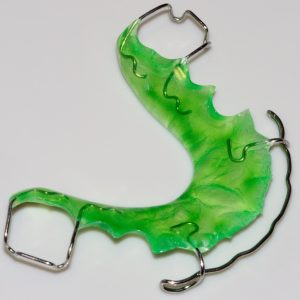
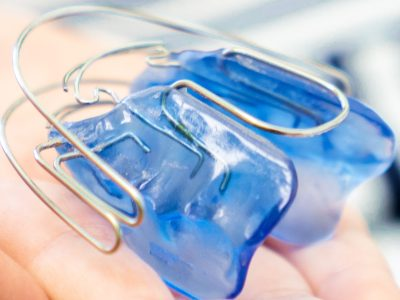
Myofunctional plates
In selected cases removable plates or trainers can also support muscle and tongue function – we discuss this individually.
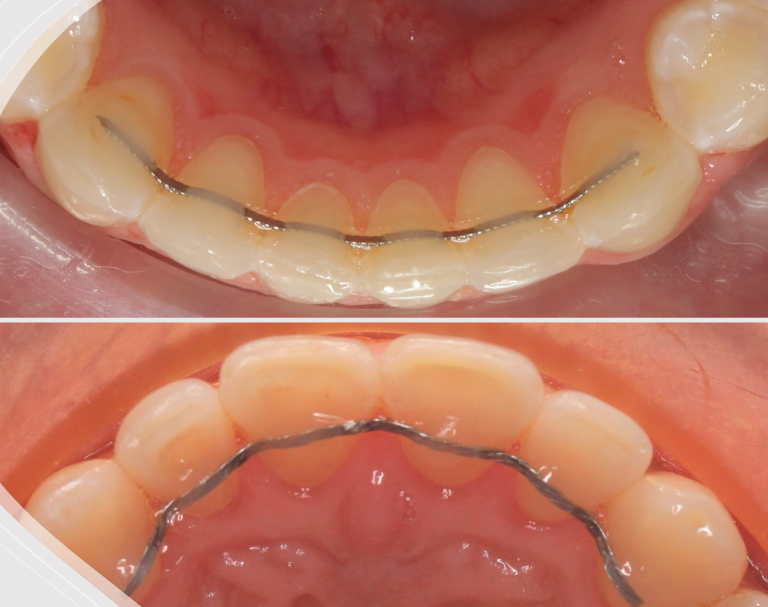
Fixed retainer (bonded wire)
A fixed retainer is a thin wire bonded behind the front teeth of the upper and/or lower jaw – often from canine to canine.
Advantages
- Invisible from the outside (lingual).
- Stabilises 24/7 – nothing to forget.
- Cannot be lost like a removable tray.
Disadvantages
- You must clean thoroughly between teeth.
- Regular flossing / interdental cleaning.
Because the wire is always in place, stabilisation is often very effective. Still, broken bonds or wire fractures can allow teeth to move – so check-ups matter.
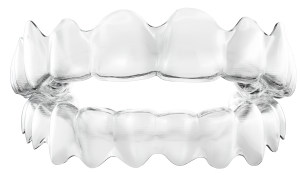
Clear aligners for retention
Transparent overlay aligners can be used during stabilisation as a removable, discreet option.
How long to wear retainers?
Relapse risk varies; cases with retrusion or lower anterior crowding are more prone.
Long-term wear (fixed or removable) may be needed to maintain the result.
After active treatment I recommend check-ups about twice a year.
Inspect your retainers and teeth regularly when you brush.
The process at our practice
- Free initial consultation – by appointment only.
- Diagnostics: X-rays, photos, digital scans without conventional impressions.
- Planning session and recommendation of suitable appliances.
- Start of treatment with instructions on cleaning and wear.
- Check-ups about every 6–8 weeks.
- End of treatment and review of the result.
- Retention – beginning stabilisation.
Book a Consultation Today
We look forward to seeing you and are happy to advise you without obligation on all options in orthodontics and dental treatment in Vienna.