
Age
Children and teenagers aged 6 to 18 who meet the age requirements of the health fund.
Orthodontics Vienna
Publicly funded braces are available through Austria’s health-fund system for eligible children and teenagers with severe dental or jaw misalignments. Dr. Manish Sablania is a qualified elective orthodontist for this programme. The practice treats patients with ÖGK, SVS, BVAEB and KFA (Vienna). Eligibility and the amount of any reimbursement are determined by your health fund after reviewing the individual case.


Important information about reimbursement
When treatment is provided by a qualified elective orthodontist, your health fund (ÖGK, SVS, BVAEB or KFA) reviews reimbursement individually. According to current ÖGK information, approved cases may receive reimbursement of 80% of the applicable contractual tariff. This does not necessarily mean 80% of the orthodontist’s invoice. Prior approval may be required. Confirm your individual eligibility with your fund before treatment begins.
Eligibility and approval are not automatic. These points usually need to come together:
Children and teenagers aged 6 to 18 who meet the age requirements of the health fund.

Severe dental or jaw misalignment – generally IOTN grade 4 or 5.

Medical necessity must be confirmed through orthodontic assessment.

The final decision rests with your health fund (ÖGK, SVS, BVAEB or KFA) – approval is not automatic.
More on braces for children and braces for teens.
The Index of Orthodontic Treatment Need classifies the severity and medical need for orthodontic treatment. Grades 4 and 5 indicate severe or very severe treatment need. The final classification must be established through orthodontic diagnosis – not from website content alone.
We do not diagnose online. Whether IOTN 4 or 5 applies is determined in the examination and explained to you in person.

As a qualified elective orthodontist, Dr. Sablania does not bill like a contracted insurer orthodontist. A typical process looks like this:
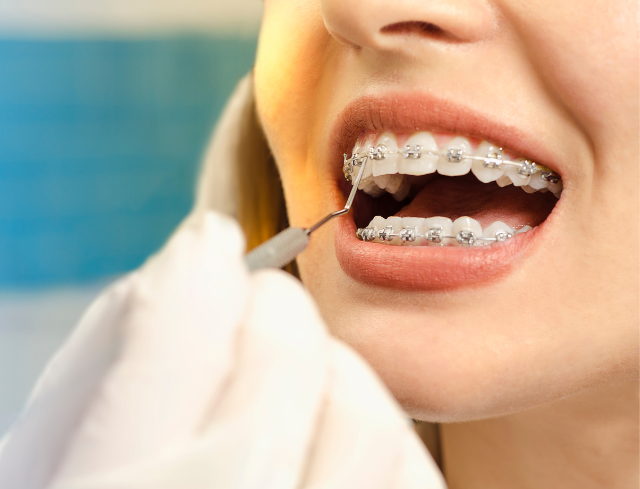
The exact process can depend on the insurer, the treatment and the individual approval.
For Gratis-Zahnspange, treatment follows the rules of the relevant health fund. Important points:

Fixed metal brackets are generally the standard funded option for fixed treatment.

Tooth-coloured ceramic brackets are an aesthetic private upgrade and are not automatically covered.

Clear aligners / Invisalign are not automatically included in the publicly funded programme.

Lingual (inside) braces are likewise not automatically covered and need a separate cost discussion.
Private options such as clear aligners are explained transparently during the consultation.
Overview – without prices. Whether reimbursement is possible, and at what level, depends on eligibility and approval.
| Option | Visibility | Possible reimbursement | Note |
|---|---|---|---|
| Metal braces | Visible | Subject to eligibility and approval | Usually the standard option in the public programme |
| Ceramic brackets | Less noticeable | Usually private | Aesthetic upgrade / private option |
| Clear aligners | Nearly invisible | Usually private | Not automatically included in the public programme |
| Lingual braces | Invisible from outside | Usually private | Separate cost clarification required |
From the first consultation through to retention, we guide you step by step – including health-fund documentation where required.


Specialist orthodontist and general dentist · Wien 1200
Approval and reimbursement are decided by your health fund (ÖGK, SVS, BVAEB or KFA). Our practice treats insured members of all these funds.
Health-fund information last reviewed: July 2026. Binding tariffs and approvals are provided by your fund (ÖGK, SVS, BVAEB or KFA). Current ÖGK information on braces
Related pages:
A transparent overview of selected services. Final health-fund approval is decided case by case.
Total cost per treatment year excluding analysis
€ 1.300,-
(private treatment)
With active, approved health fund:
No charge
€ 300,-
No charge
For patients who already have fixed braces and would like them removed at our practice.
€ 350,-
We will explain in person whether publicly funded braces may apply in your case – and which private alternatives are available.
Opening Hours
Mon–Fri: 10:00 – 17:00
Telephone
+43 1 3306090